
- News
- Membership
- Graduate Student Teaching Association
GSTA Mission Statement
The Graduate Student Teaching Association (GSTA) provides psychology graduate student teachers with an array of services to hone their skills in the classroom. GSTA is an organization within APA Division 2: The Society for the Teaching of Psychology (STP). Therefore, psychology graduate student teachers who are interested in becoming a member of GSTA must first join STP, and then indicate their interest in GSTA.
A good teacher is courteous, passionate, knowledgeable, and dedicated. A good teacher also has the ability to exert influence beyond the classroom, capable of helping others to change the way in which they think about specific issues in psychology, as well as broader philosophical dilemmas that we encounter on a daily basis.
GSTA recognizes the power of employing basic psychological principles to positively change the lives of those around us, and that teaching can serve as an effective vehicle toward this end. Contributing to the body of teaching-related research, both as a producer and consumer, is another way to positively influence others.
GSTA is an avenue for graduate student teachers in psychology to integrate information relevant to their career development as future contributing members of the professoriate. Ultimately, GSTA can be a powerful tool for psychology graduate student teachers to dedicate themselves to a lifetime of improving the learning process and improving the lives of others.
Services for Graduate Student Teaching Assistants
The Graduate Student Teaching Association (GSTA) of APA Division 2: The Society for the Teaching of Psychology was organized in 2002. The GSTA works tirelessly to provide graduate student teachers with services designed to enhance their teaching effectiveness. Graduate student training programs across the country seem consistently dedicated to training graduate students to conduct high quality research and to develop effective clinical skills. However, training designed to support and enhance the classroom experiences of graduate student teachers is often lacking. Membership in the GSTA is beneficial for graduate student teachers by providing them with a variety of useful services designed to help them with both their classroom efficacy and post-graduation goals.
Graduate students who are members of APA Division 2 are automatically members of the GSTA as well. Graduate student members receive a reduced membership fee and a yearly subscription to Teaching of Psychology, the world's foremost academic journal on teaching-related issues. Graduate student members also have access to many additional services. For instance, the GSTA listserv allows graduate students to pose questions and discuss issues pertaining to the teaching of psychology. In addition, this Web site has been established that will contain helpful resources for graduate student teachers across the country. Finally, the GSTA has annual programming hours at the APA convention, and this time will be used to address topics relevant to graduate student teachers.
Meet the 2026 GSTA Steering Committee
Chair: Ashmita Mazumder (she/her)

Ashmita is a doctoral student in social/personality psychology at the University of Toronto - Scarborough. Her work focuses on examining the relationship between daily impulsive behaviors and polysubstance use, as well as investigating the underlying factors contributing to discrepancies between self-reported and behavioral measures of impulsivity. As a teaching assistant, she has supported courses including Scientific Communication, Advanced Personality Psychology, Psychology in Context, and Psychological Assessment. She is also the editor-in-chief for an undergraduate journal- the Journal of Natural Sciences, where she aims to make the publishing process transparent and accessible, helping undergraduate students gain experience as authors, editors, and reviewers.
Associate Chair: Lindsey Rutter (she/her)
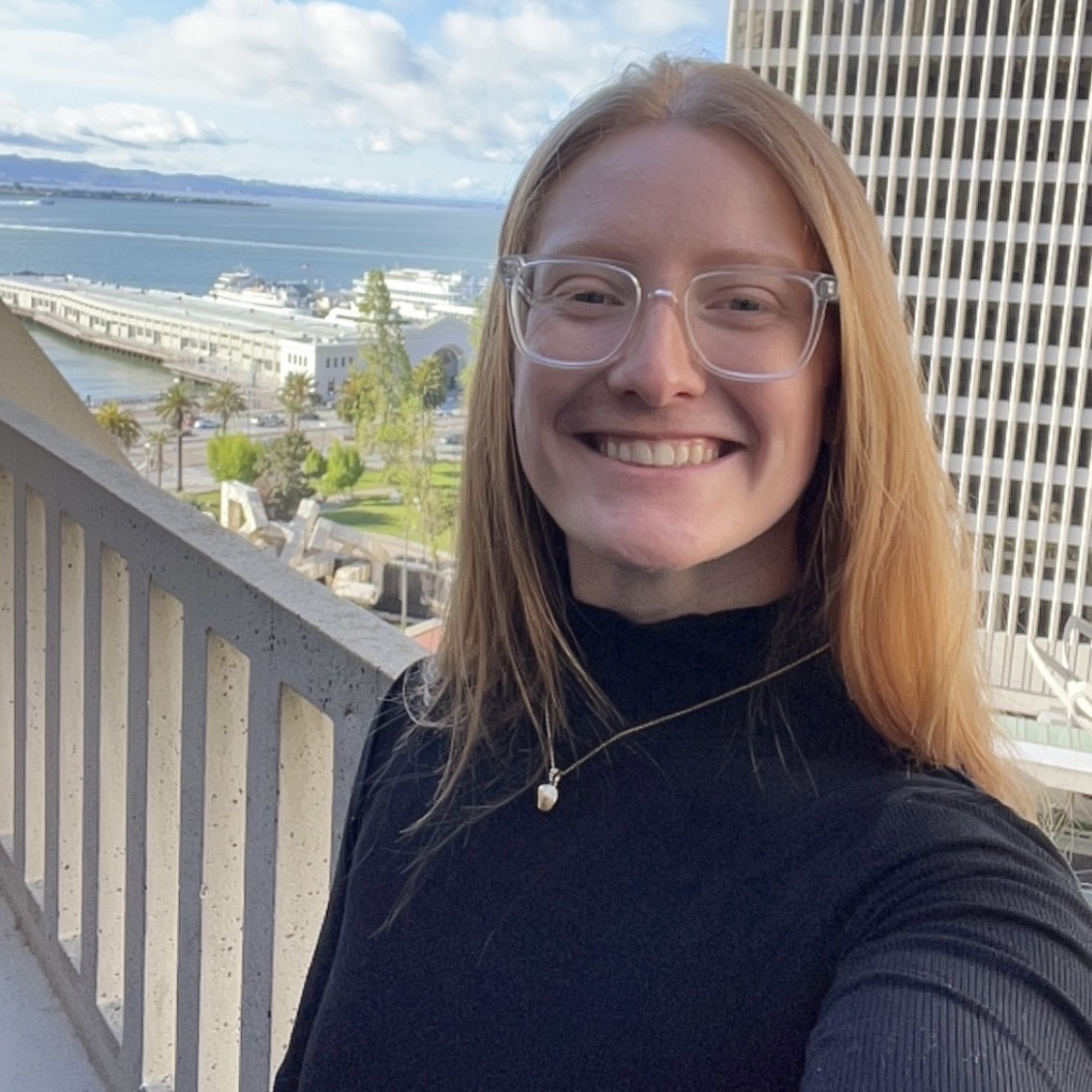
Lindsey is a doctoral student in psychology with a concentration in Scholarship of Teaching and Learning at Oregon State University. She received her M.S. in Sport and Performance Psychology from the University of Western States. Lindsey has served as a GTA and/or primary instructor for Introductory Psychology courses. She is interested in exploring student belonging in higher education settings, as well as investigating the impact of stereotype threat on academic performance for diverse groups of individuals.
Melissa "Mel" Ceren (she/her)
 Mel is a PhD student in Educational Psychology at the CUNY Graduate Center. Her research focuses on how environmental education in community and school gardens fosters equitable access to resources, economic stability, and food security. Drawing on her background in museum education, she has taught in informal learning environments like the New York Botanical Gardens and the American Museum of Natural History, designing hands-on STEM curriculum and activities that engage diverse learners. Melissa has also served as a teaching assistant for undergraduate statistics courses and recently taught about the Farm Bill to young adults at East New York Farms and Farm School NYC.
Josh Lovett (he/him)

Josh is a fourth-year doctoral student in the Community & Applied Developmental Psychology program at the University of Illinois Chicago. Josh attended Duke University, where he studied psychology and education. Prior to pursuing graduate studies, Josh was a Fulbright Scholar in South Korea, where he spent three years teaching ESL to a wide range of students. He is broadly interested in the social and behavioral contexts of learning, especially in the social-emotional competencies of teachers and how this impacts a variety of factors in the classroom and school ecology. He currently serves as the instructor of record for Statistical Methods for Behavioral Science. Josh is particularly interested in teaching and intends to pursue a teaching-oriented career upon graduation.
Elizabeth "Liz" Taylor

Liz is a second-year doctoral student in Developmental Psychology at Virginia Commonwealth University. Her research focuses on threat perception. Within the realm of the scholarship of teaching and learning, she is particularly interested in research around stereotype threat and ways of combating this in the classroom so that students can thrive. She is passionate about promoting a sense of belonging in classroom spaces, as well as fostering creativity and even joy. Liz has served as a graduate teaching assistant for various psychology courses, with her favorite course being Perception. She has also mentored undergraduate students on independent research projects in her advisor’s lab.
Romeo Penheiro

Romeo Penheiro is a doctoral student in Clinical Neuropsychology at the University of Houston. His research focuses on cognition and everyday functioning in adults, with interests in HIV-associated neurocognitive disorders, intraindividual variability, and psychometric/measurement approaches. Romeo enjoys translating “stats-y” ideas into clear, practical takeaways and has experience teaching statistics to undergraduate students. Clinically, he is interested in evidence-based interventions and culturally responsive care. Outside of the lab and classroom, Romeo loves swimming, exploring new coffee shops, and finding small ways to make learning feel more human, connected, and fun.
Mackenzie Devaney

Mackenzie is a fourth year PhD candidate in social psychology at the University of Minnesota-Twin Cities. Mackenzie's research focus in political psychology, specifically the correction of political misinformation and how politics is a part of one's identity. Mackenzie has served as teaching assistant and section leader for a variety of courses including Introduction to Psychological Measurement and Data Analysis. She will be serving as a graduate instructor for Intro to Social Psychology. Mackenzie is also an adjunct professor at Normandale Community College where she teaches Intro to Psychology and Psychology of Gender. Mackenzie also serves as the Co-Director for NextGen Psych Scholars Program, a national mentoring organization for individuals applying to psychology PhDs.
GSTA Activities and Initiatives
Join GSTA at ACT 2026 on-site in St. Louis!
- This year as we'll be running a lunch PIE: Supporting Graduate Student Instructors: Insights from the GSTA Member Survey. We hope to see you there!
- September 2026 - Developing a Teaching Portfolio Workshop
- May 2026 - Designing a Course Webinar: Demystifying the process of course design and instruction
Online workshop series 2025
- May 2025 - Voices in Teaching: Highlighting Pathways to a Career in Teaching Psychology
Join GSTA at ACT 2025 on-site in Minneapolis!
- This year as we'll be running a lunch PIE: Supporting Graduate Student Instructors: Insights from the Graduate Student Teaching Association. We hope to see you there!
Ongoing opportunities for graduate students
- Apply for the Graduate Student Travel Grant for STP (Due mid/ late June, annually)
- Join as an STP member! Annual membership is only $20 USD for graduate students.
GSTA online
- Follow us on Facebook (groups/theGSTA)
- Follow us on Instagram (@gstateachpsych)
- Follow us on BlueSky (@gstateachpsych.bsky.social)
- Email us at gsta@teachpsych.org
GSTA Links
- Read more at the GSTA Corner
- See the STP Leadership Directory for GSTA leadership
- Check out the GSTA's e-book series "How We Teach Now" geared specifically towards graduate student and novice instructors. Volume 1 is a guide to student-centered teaching and Volume 2 is a guide to transformative teaching.
- GSTA Policies and Procedures (Updated October 2017)
- The GSTA Blog (2014-2020) is available as an archive.
Former GSTA Members:
2025 Leadership: Alexa "Lex" Sacchi (Chair), Ashmita Mazumder (Associate Chair), Melissa "Mel" Ceren, Josh Lovett, Nghi "Sherry" Nguyen, Lindsey Rutter
2024 Leadership: Lauren N. Girouard-Hallam (Chair), Alexa Sacchi (Associate Chair), Kelly Gonzalez-Stewart, Christopher Kleva, William Rayo,
2023 Leadership: Skye Mendes (Chair), Madeline Bruce (Associate Chair), Morgan Franklin, Lauren Girouard-Hallam, Christopher Kleva, Alexa Sacchi
2022 Leadership: William Ridgeway (Chair), Morgan Franklin, Christopher Kleva, Skye Mendes, Jackson Pelzner
2021 Leadership: Amy Maslowski (Chair), Maaly Younis (Deputy Chair), Adam Green, Laura Simon, Kelly Cuccolo, William Ridgeway
2020 Leadership: Elizabeth Che (Chair), Jessica Brodsky (Deputy Chair), Amy Maslowski (Treasurer), Adam Green (Listserv Laison), Terrill Taylor (Social Media), Maaly Younis (Social Media)
2020 Blog Editors: Hallie Jordan, Sarah Frantz, Maya Rose, Raoul Roberts, Tashiya Hunter, Laura Mason, Megan Nadzan
2019 Leadership: Elizabeth Che (Chair), Jessica Brodsky (Deputy Chair), Sarah Frantz (Secretary), Olga Parshina (Treasurer)
2019 Blog Editors: Hallie Jordan, Sarah Frantz, Charles Raffaele, Maya Rose